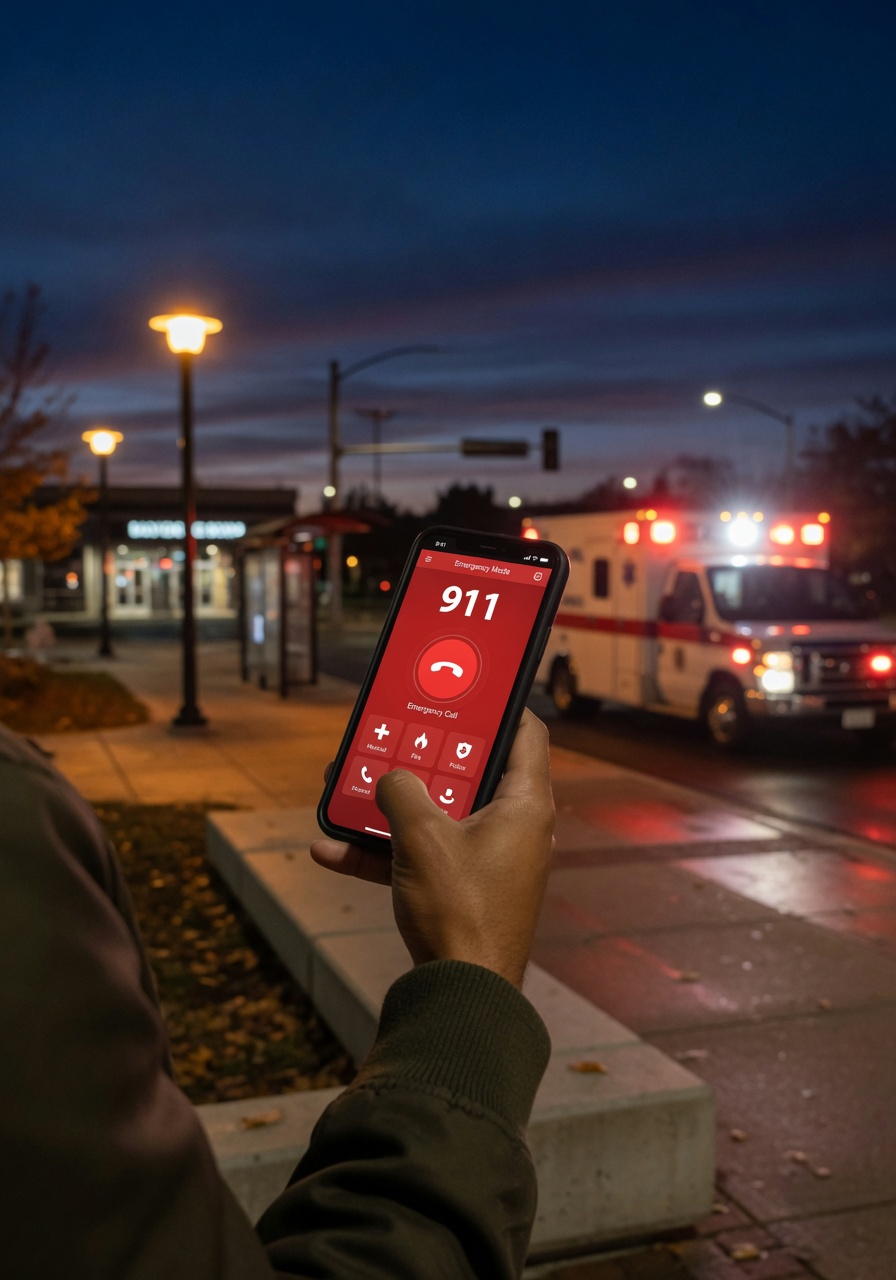
When to Call 911: Don't Wait Too Long
One of the most dangerous instincts during a medical emergency is the urge to wait and see. Someone feels dizzy and sits down. A coworker complains of chest pressure but says it is probably nothing. A child falls and seems groggy but does not cry. In each case, the people nearby hesitate — wondering if it is serious enough to call 911, worried about overreacting, hoping the moment passes on its own.
That hesitation kills. Emergency dispatchers would rather you call and have the situation turn out to be minor than have you wait until it is irreversible. When in doubt, call. The following warning signs are clear indicators that professional emergency help is needed immediately.
Cardiac Arrest: Call First, Then Compress
Cardiac arrest is the ultimate time-critical emergency. The heart stops pumping effectively, blood flow to the brain ceases, and without intervention, death follows within minutes. Call 911 the moment you recognize cardiac arrest — or direct someone to call while you begin CPR.
Signs of cardiac arrest include:
- Sudden collapse without warning
- No response when you tap the shoulder and shout
- No normal breathing — remember that gasping, snoring sounds (agonal breathing) are not normal
- No pulse (if you are trained to check, but do not delay compressions to search for one)
- Loss of consciousness with no recovery
If you are alone with an adult victim, call 911 first (or use speakerphone while you call), then begin CPR immediately. If you are alone with a child or infant and have no phone with you, give about two minutes of CPR first, then call 911 — children’s arrests are more often caused by breathing problems, and those two minutes of compressions and breaths can be life-saving. If you do have a phone, call 911 on speaker right away and start CPR.
Stroke: Think FAST
A stroke occurs when blood flow to the brain is interrupted, either by a blocked artery (ischemic stroke) or a burst blood vessel (hemorrhagic stroke). Every minute of delayed treatment can result in the loss of nearly two million brain cells. Stroke is a 911 emergency — not a "wait and see if it gets better" situation.
Use the FAST acronym to recognize stroke quickly:
- F — Face drooping: Ask the person to smile. Does one side of the face droop or look uneven?
- A — Arm weakness: Ask them to raise both arms. Does one arm drift downward or feel numb?
- S — Speech difficulty: Ask them to repeat a simple sentence. Is their speech slurred, strange, or impossible?
- T — Time to call 911: If any of these signs are present, even if they come and go, call 911 immediately. Note the time symptoms first appeared — this information is critical for treatment decisions.
Additional stroke warning signs include sudden severe headache with no known cause, sudden confusion, sudden vision loss in one or both eyes, sudden dizziness or loss of balance, and sudden numbness on one side of the body. Stroke does not always present with all FAST symptoms. When something sudden and neurological feels wrong, call.
Severe Bleeding
Not every cut requires an ambulance. A paper cut or a shallow kitchen knife nick can be managed with direct pressure and a bandage. But some bleeding is life-threatening and demands emergency intervention.
Call 911 when:
- Blood is spurting or pulsing from a wound (arterial bleeding)
- Blood soaks through bandages and direct pressure does not slow it
- The wound is deep, gaping, or involves a severed body part
- Bleeding follows a fall from height, a motor vehicle collision, or an assault
- The person shows signs of shock: pale, cold, clammy skin; rapid weak pulse; confusion; nausea
- Bleeding is from the head, neck, chest, or abdomen and may be internal
While waiting for EMS, apply firm, direct pressure to the wound with a clean cloth or gauze. Do not remove soaked bandages — add more on top. If the bleeding is from a limb and direct pressure is insufficient, a tourniquet applied above the wound may be necessary. Note the time the tourniquet was applied and tell the dispatcher.
Breathing Difficulty
Difficulty breathing is always a reason to call 911, even if the person can still speak. Conditions can deteriorate rapidly, and what looks like mild shortness of breath can become respiratory arrest within minutes.
Call immediately if someone is:
- Gasping for air or unable to speak in full sentences
- Breathing at an unusually fast or slow rate
- Making wheezing, whistling, or high-pitched sounds (stridor)
- Showing blue or gray colour around the lips, face, or fingernails (cyanosis)
- Using neck and chest muscles visibly to breathe (retractions)
- Experiencing a known severe allergic reaction (anaphylaxis) with throat swelling
- Choking and unable to cough, speak, or breathe
- Having an asthma attack that does not improve after using their inhaler
Help the person sit upright in a position that makes breathing easiest — usually sitting up and leaning slightly forward. Loosen tight clothing around the neck. If they have prescribed emergency medication (such as an epinephrine auto-injector for allergies), help them use it while waiting for paramedics.
Altered Consciousness
Any significant change in a person's level of awareness is a red flag. The brain is telling you something is seriously wrong.
Call 911 when someone:
- Becomes suddenly confused, disoriented, or agitated without explanation
- Is difficult to wake or cannot stay awake (lethargy progressing to unresponsiveness)
- Has a seizure that lasts more than five minutes, or has repeated seizures without regaining consciousness
- Has a seizure and is pregnant, diabetic, injured, or experiencing their first-ever seizure
- Appears intoxicated but has not consumed alcohol or drugs (could indicate stroke, head injury, or metabolic crisis)
- Has a sudden, severe headache followed by confusion or loss of consciousness
- Is unresponsive after a fall, even if there is no visible injury
Do not try to restrain someone having a seizure. Clear the area of hazards, place something soft under their head, and time the seizure. After the seizure ends, roll them onto their side if they are breathing and not fully alert.
What to Tell the Dispatcher
When you call 911, you will be connected to an emergency dispatcher trained to guide you through the situation while help is dispatched. Stay as calm as possible and provide the following information:
- Location: Your exact address, including apartment or suite number, floor, and any landmarks. If you are on a highway, provide the direction of travel, nearest exit, and kilometre marker.
- Phone number: In case the call is disconnected, the dispatcher needs a way to reach you.
- What happened: Describe the emergency clearly. "My coworker collapsed and is not breathing" is better than "Something is wrong."
- Current condition: Is the person conscious? Breathing? Bleeding? What symptoms are you seeing right now?
- What you are doing: "I am performing CPR" or "I am applying pressure to a wound" helps dispatchers understand the scene.
- Special information: Known allergies, medications, medical conditions, or hazards at the scene (aggressive dog, chemical spill, active threat).
Answer the dispatcher's questions — they are not delaying help. Emergency services are typically dispatched while you are still on the phone. The questions help paramedics prepare for what they will find when they arrive.
Stay on the Line
Do not hang up until the dispatcher tells you it is okay to do so. They may provide life-saving instructions — CPR guidance, choking manoeuvres, childbirth assistance, or bleeding control techniques — while you wait for the ambulance. These instructions are based on established emergency medical protocols and are designed for people with no medical training.
If possible, put the phone on speaker so your hands are free to help the victim. If someone else is available, have them meet the ambulance at the entrance and guide paramedics to the exact location. Unlock doors and clear hallways if you can do so without leaving the victim unattended.
When in Doubt, Call
You will never be penalized for calling 911 in good faith. Emergency systems exist precisely for moments of uncertainty. A false alarm that turns out to be nothing is infinitely better than a real emergency that went unreported until it was too late.
Trust your instincts. If something feels seriously wrong — if the person's colour, breathing, consciousness, or behaviour has changed suddenly and alarmingly — make the call. Start with 911, then provide whatever first aid you are trained to give. The combination of early activation of emergency services and immediate bystander care is what saves lives.